Paramount Home Solutions repairs wind-damaged and leaking shingle roofs across Monmouth County. That means shingles lifted by nor'easters and summer storms, leaks at chimneys, dormers and vents, and cracked pipe boots. We find where the water gets in and put the price in writing before any work starts. Our office is in Spring Lake, right here in the county, a 15- to 45-minute drive depending on the town. We're open every day, 8 AM to 8 PM.
Book a Free Roof Inspection
We'll call back to set up your free inspection.
Or call us directly: (732) 790-1626 – open every day, 8 AM–8 PM
We repair pitched asphalt-shingle roofs, at the shore and inland, and the work falls into six kinds of calls.
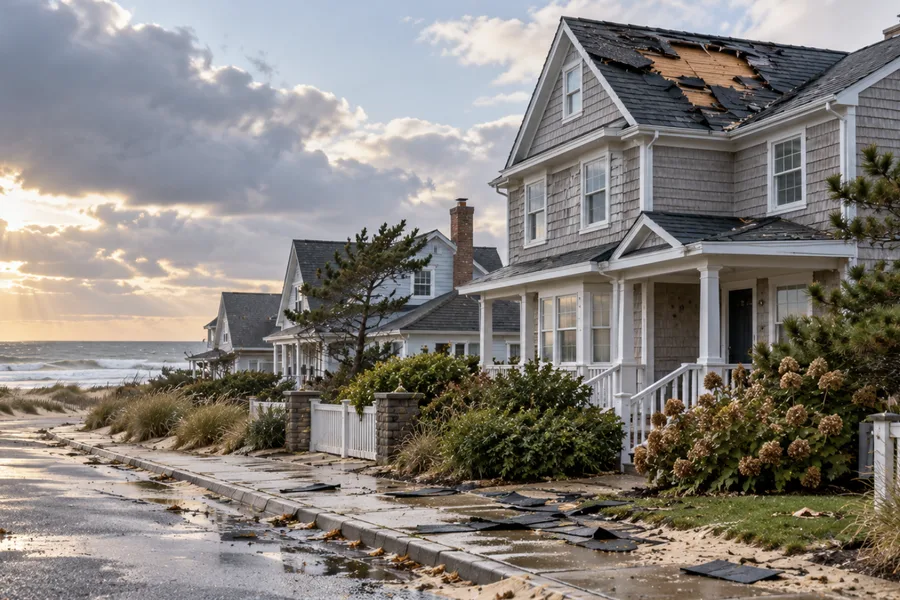
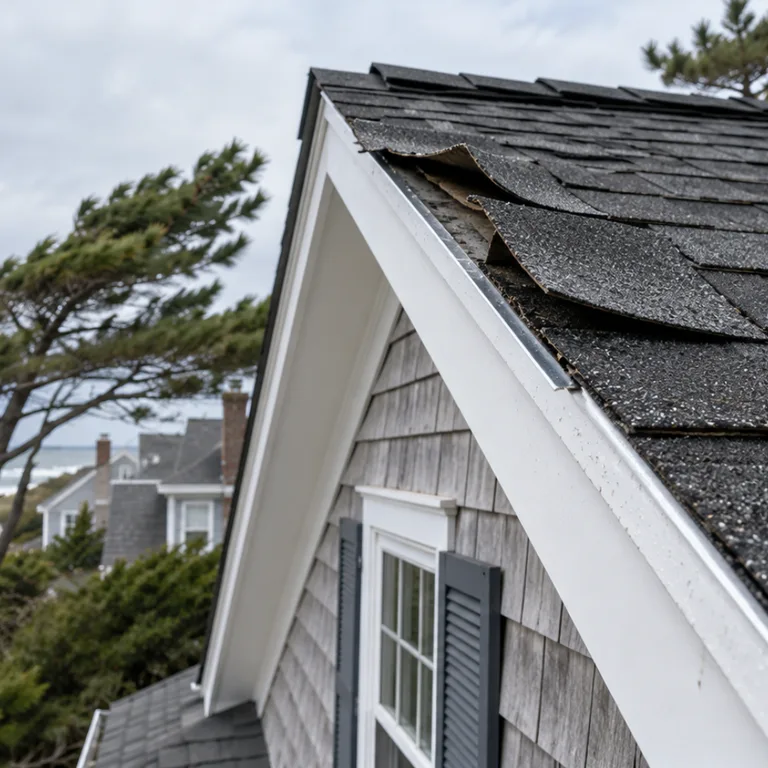
A nor'easter or a summer thunderstorm can lift, crease or tear off shingles. The edges and the ridge usually go first. We replace the damaged shingles and reseal the courses above. Call when pieces turn up in the yard.
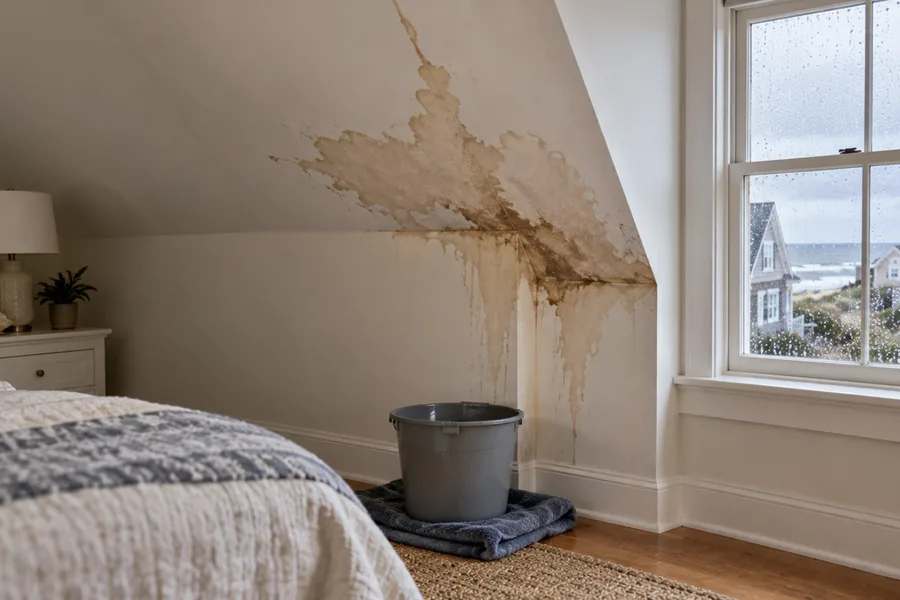
Before we price anything, we trace the leak to its entry point. That could be flashing, a pipe boot, a valley (the channel where two slopes meet) or a lifted shingle. Wind-driven rain gets into gaps an ordinary shower never reaches, so call after the first stain.
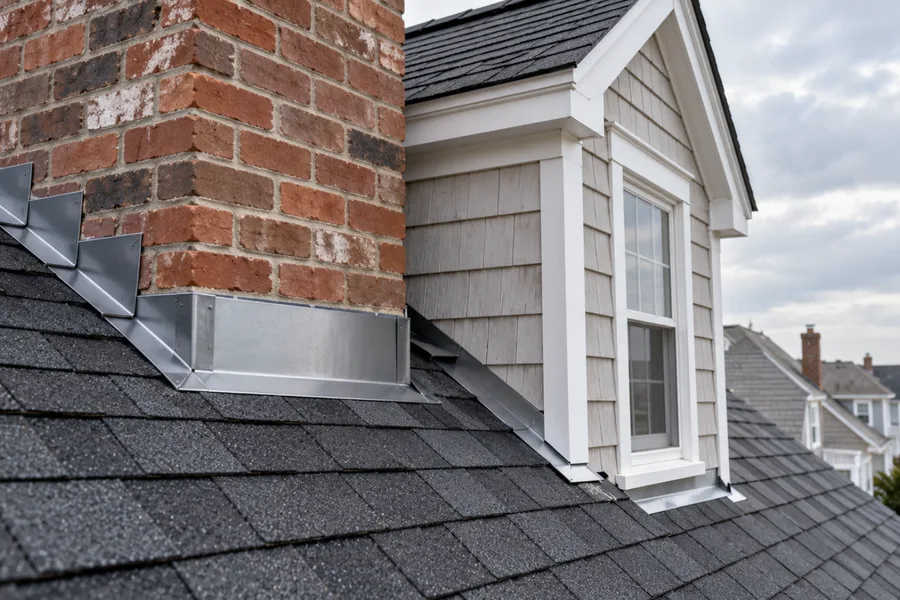
Where the roof meets a chimney, a dormer wall or a skylight, two pieces of metal keep water out. Step flashing is woven in with the shingles, and counterflashing laps over it. We reseal or replace that metal. Call if a stain sits close to one of them.
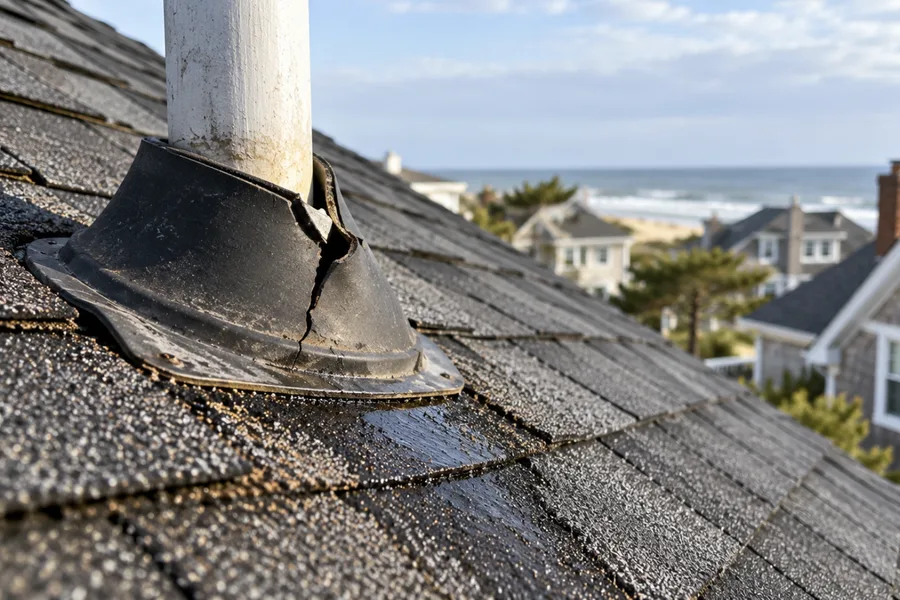
Sun and salt air off the ocean wear out the rubber collar that seals each plumbing vent where it comes through the roof. We replace the cracked boot and look over the vent's flashing. A stain on a top-floor bathroom ceiling is the usual clue.
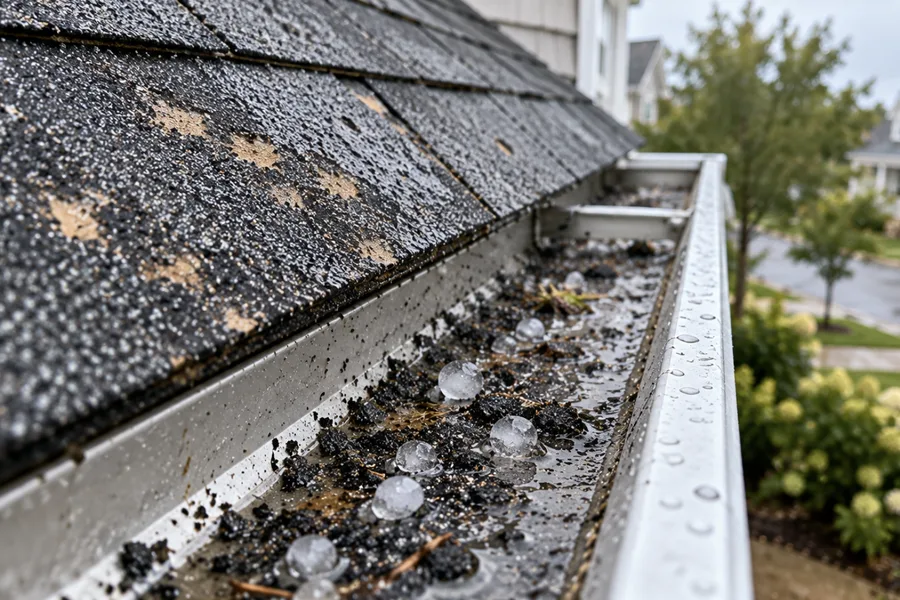
Hail can bruise a shingle, cracking it under the granules, and nothing shows from the ground. We photograph each slope and mark the same 10-by-10-foot test squares an adjuster uses. We also pull a free record of past storms at your address.
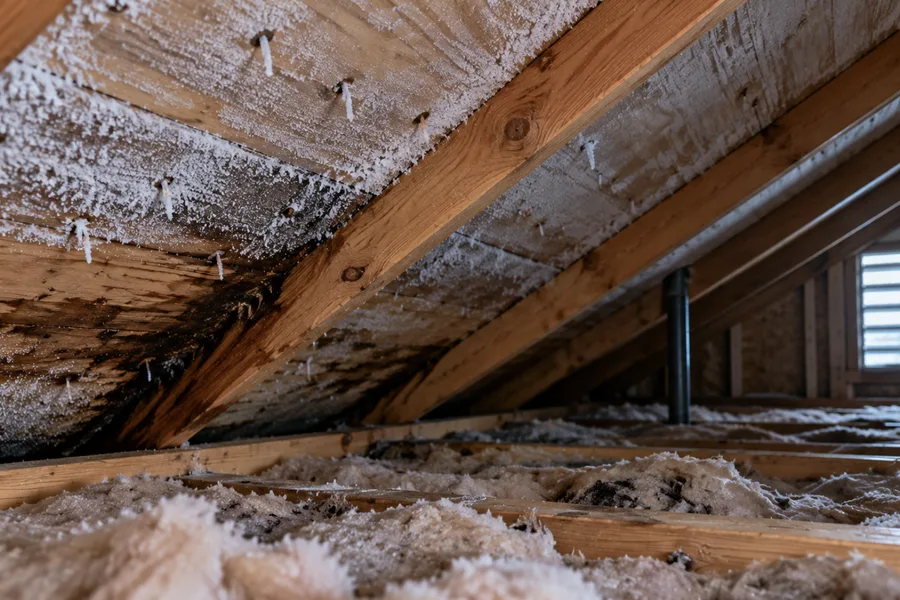
A stain after a run of freezing nights and thawing afternoons often points to attic ventilation that's out of balance. So does frost or damp insulation in the attic. We check the eaves and correct the airflow.
Strong wind in Monmouth County isn't only a summer thing. Nor'easters and coastal storms bring gusts near 60 mph to the shore towns from fall through spring. Summer thunderstorms add about seven severe-wind days a year across the county. Wind works on the edges of a roof first: the rakes along the gable ends, the eaves and the ridge. An older shingle that has lost its seal can lift and crease without ever blowing off. You won't spot it from the driveway, but the next wind-driven rain will find it.
Then there are the houses. More than eight in ten homeowners here live in a detached house, so every edge, vent and chimney on that roof is yours to look after. The county's homes span every era. About four in ten owner-occupied houses went up between 1950 and 1979, and about three in ten in the 1980s and '90s. Plenty of roofs here are already a second roof, and many first roofs from the '80s and '90s are near the end of their life. That's why we photograph every slope and edge before we suggest anything. After a nor'easter, book the free inspection and ask for a storm-history report on your address.
Tell us where the water shows up, or what you noticed after the storm, and we'll agree on a time.
We take a picture of each slope, plus the rakes and ridge. We check the shingles, flashing, underlayment, vents and gutters, then go into the attic to look at ventilation and decking. It usually takes under an hour.
You get an itemized estimate covering materials, labor and any decking, with a clear recommendation and no obligation.
We confirm your shingle is still in production, replace what's damaged, reseal the rows above and swap out any bad flashing or pipe boots.
None of this asks you to take our word for it.
We're rated 5.0 on Google · 420+ reviews, and here are four from customers of our Spring Lake office. Read the reviews of our Spring Lake office
“With all the rain in October I had leaks coming from the roof of my home in Bradley Beach NJ. … Joe’s recommendation was to replace and cork some nails before spending money on a new roof. Joe advice addressed the issue and there have not been any leaks from the repaired roof.”
“Their contract was clearly written & they answered any questions I had along the way. … After completion, they sent pictures of the finished roof, gutters etc.”
“They were professional, honest and empathetic in working with me …”
“…was not trying to sell us anything we didn’t need and was very no nonsense. We truly couldn’t have asked for a better experience!”
In wind-driven rain, water can run sideways under a lifted shingle or a loose edge of flashing and come through the ceiling well away from where it got in. So a stain only tells us where to start looking. The cause can sit a few feet uphill or on another side of the roof.
| What you notice | What it usually is | What we do |
|---|---|---|
| Shingles on the lawn or driveway after a nor'easter | Shingles lifted or torn off along the edges or at the ridge | Replace them and seal the new ones down |
| A stain that only appears after wind-driven rain | A lifted shingle or loose flashing on the side facing the wind | Check every slope, not just the one above the stain |
| A stain near the chimney | Worn or loose chimney flashing | Reseal or renew the step flashing and counterflashing (flashing work only) |
| A stain on a sloped ceiling under a dormer | Step flashing along the dormer's side walls | Lift the shingles there and redo the step flashing |
| A drip near a bathroom vent pipe | A cracked pipe boot | Fit a new boot and check the metal around it |
| Granules in the gutters after a storm | Shingles bruised by hail | Document the hits and mark the adjuster's test squares |
| Damp insulation or frost in the attic in winter | Ventilation out of balance, so it's condensation and not rain | Rebalance the soffit and ridge venting |
If damage shows on several slopes, or the roof is more than 20 years old, read the price ranges and our repair-or-replace rule just below before you call.
Most small repairs we do in Monmouth County come in between $150 and $800. That covers jobs like a few lifted shingles, a cracked pipe boot or a short run of flashing. Bigger jobs cost more, and the table shows the range.
Four things move the number: the type of damage, how much of the roof it covers, the materials and the labor. Urgent or structural repairs cost more. On a tall house near the beach, getting a crew and materials up safely can add labor time.
The inspection costs nothing, and neither does the storm-history report. Sometimes we lift shingles and find soft decking, the plywood the roof is nailed to. That's the one thing that can change the price, and you hear it from us before we touch it. Financing is available for repairs, with same-day approval in most cases (conditions apply). Whatever the job, the exact price is itemized and written down before work starts.
| What | What it usually costs |
|---|---|
| Roof inspection | Free, with photos and a written recommendation |
| Storm-history report | Free |
| Small repair (a few shingles or one pipe boot) | Usually $150–$800 |
| Larger section, or flashing at a chimney or dormer | Typically from a few hundred dollars to several thousand |
| Hidden damage, such as rotted decking | Priced only if it turns up, and we tell you first |
| Your exact price | Written and itemized before the job begins |
Our rule of thumb is simple. Isolated damage on a roof under about 15 years old is usually worth repairing. Widespread granule loss, curling on several slopes or a roof past 20 years points to replacement.
A Monmouth County house from the '80s or '90s may still wear its first roof, and by now that roof is close to worn out. If it's time, we'll tell you. If waiting is fine, we'll say that just as plainly. Two existing layers of shingles also change the math, because a new roof can't go over them and both have to come off first.
Before suggesting a patch, we check your shingle line is still made so the repair blends in. When replacement is the honest answer, we install complete GAF roofing systems (underlayment, starter strip, shingles, ridge cap and ventilation) and quote it in writing. Financing is an option there too; conditions apply.
Call (732) 790-1626. We pick up seven days a week, 8 AM–8 PM. Here the cause is usually a cold-season nor'easter or a summer thunderstorm.
Water through the ceiling. Move what you can, catch the drip in a bucket and photograph anything wet. If the ceiling sags, keep everyone, pets too, out from under it and leave it alone.
Water near lights or outlets. Don't touch them. Flip that breaker off only if you can reach the panel without standing in water. Otherwise keep clear and call an electrician. Never reset a tripped breaker. If you see sparks or smoke, get out and call 911.
Off the roof, clear of wires. Look from the ground only. Stay at least 30 feet from any downed line and call JCP&L or 911.
Call Now – (732) 790-1626We drive out from our office in Spring Lake to the whole county. Inland, that runs from Middletown and Red Bank to Freehold, Howell and Wall. Along the shore, we go from Long Branch and Asbury Park down to Belmar and Manasquan. Depending on where you live, the drive is 15–45 minutes, so wherever you are in the county, call and give us the address.
Short answers to what homeowners ask us first.
Most small repairs usually run $150–$800 in Monmouth County. That covers something like a handful of shingles or one pipe boot. A larger section usually costs more, up to several thousand dollars. The type and size of the damage, materials and labor set the number, and emergency or structural jobs run higher. The inspection is free, and you'll have the exact figure, itemized and on paper, ahead of any work.
Often you can't tell from the ground. Wind lifts shingles along the roof's edges and ridge first, and a lifted one can settle back looking fine. From a window or the yard, look for shingle pieces on the lawn, granules at the downspouts or bent chimney metal. Stay off the roof. Book the free inspection, and we'll take photos of all sides of the roof and pull the storm-history report for your address. If it's storm damage, we document it for your adjuster, and the claim stays yours.
For a detached one- or two-family home, no. New Jersey treats repairing the shingles on that kind of house as ordinary maintenance, and there's no 25% rule for roof repairs. On a townhouse or twin, we check what applies first. Historic districts are the exception. In Ocean Grove, roof work needs sign-off from Neptune Township's historic preservation commission before it begins, even without a construction permit. Red Bank's historic districts have a similar review. Tell us your address, and we'll plan around it.
That's up to your policy and your insurer. We don't decide it, and we won't promise it. What we can do is photograph the damage, write a scope your adjuster can work from, be there for the adjuster's visit and hand you the storm report for the address. It remains your claim from start to finish. And if the roof is really due for replacement, we'll tell you that straight.
It comes down to finding the real entry point, and that's where we start. We follow the water back to the flashing, pipe boot or lifted shingle that's letting it in, rather than sealing over the stain. Then we show you photos of the cause. Our own crews do the repair, carrying general liability and workers' compensation coverage, under NJ Home Improvement Contractor registration 13VH11654000.
Call (732) 790-1626 or send the form. We'll photograph the whole roof, edges included, walk you through what we found and write the price down before anyone starts work.
(732) 790-1626
Wind-damage, leak and flashing repair for homes across Monmouth County, by Paramount Home Solutions of Spring Lake, NJ.